
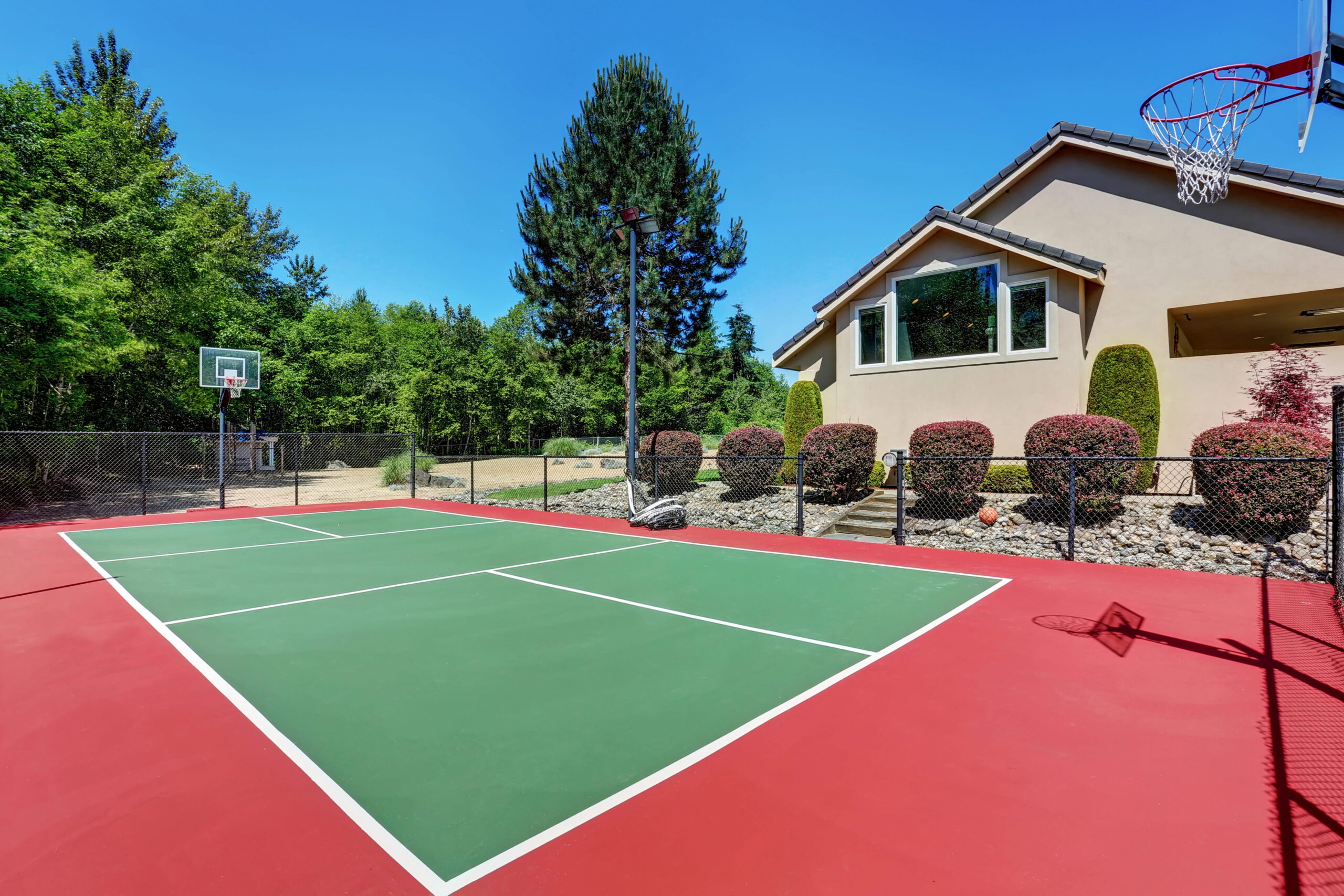
A backyard basketball or pickleball surface looks simple once it is finished, just a flat, painted slab ready for immediate play. What actually determines whether that surface stays smooth for twenty years or starts cracking within three has almost nothing to do with the paint and everything to do with what happens underground before any surfacing material goes down.
Why Site Evaluation Matters More Than the Surface Material
Every property has its own combination of soil composition, slope, and existing drainage patterns, and none of that is visible once a project is finished. A game court construction project that skips a thorough site evaluation is gambling on conditions no one actually checked. Lot dimensions and grading get most of the early attention, but what lies beneath the surface matters just as much for how the finished court performs over time.
How Maryland’s Clay Soil Complicates Excavation
Much of Maryland sits on clay-heavy soil that behaves very differently from sandy or well-drained ground. Clay expands when saturated and contracts as it dries, and that repeated movement puts stress on anything built directly on top of it without proper preparation. A base that does not account for this seasonal expansion and contraction will eventually telegraph that movement up through the surface, showing up as cracks, uneven seams, or low spots where water starts to pool.
Why Drainage Design Comes Before Anything Else
Water management shapes nearly every other decision in court construction. A properly designed base needs to move water away from the playing surface rather than letting it collect underneath. Key elements of a sound drainage plan include:
- Proper slope calculated across the entire surface, not just at the edges
- A sub-base material that allows water to pass through rather than trap it
- Perimeter drainage that carries water away from the court entirely
- Grading that accounts for how water already moves across the property today
Skipping any of these steps creates a court that looks fine on day one but develops problems within the first few wet seasons.
What Happens When Freeze-Thaw Cycles Hit a Poorly Drained Base
Maryland winters bring repeated freezing and thawing, and that cycle is unforgiving toward any moisture trapped beneath a court surface. Water that seeps into the base and then freezes expands, pushing up on the layers above it. Once that cycle repeats through several winters, the surface above starts to heave, crack, or separate at the seams, problems that are far more expensive to fix after the fact than they would have been to prevent with proper drainage from the start.
How Grading Prevents Long-Term Cracking
Even a small grading error can concentrate water in one spot rather than spreading it evenly across the entire surface. That concentration point becomes the place where problems start first, often years before the rest of the court shows any wear at all. Careful grading during the initial build accounts for how the property drains naturally and adjusts the base accordingly, rather than fighting against the site’s existing water patterns.
Building a Surface That Lasts
None of this preparation is visible in the finished product, but it determines almost everything about how long that finished product actually lasts. A game court construction project built on a properly prepared base will outlast one built quickly on unprepared ground, even if both look identical on the day they are completed.
Getting Your Court Built Right the First Time
The parts of a court project that matter most are often the parts a homeowner never sees once construction wraps up. Back Creek Builders LLC evaluates soil conditions, drainage patterns, and grading on every court project before a single design decision gets finalized, since getting the foundation right the first time avoids costly repairs down the road. If you are planning a backyard court, reach out to talk through what your specific property will need before construction begins.