Kitchen Remodeling Annapolis, MD
Kitchen remodeling ranks among the most complex residential renovation projects. Multiple trades converge in a single room—plumbing, electrical, cabinetry, countertops, flooring, lighting, ventilation. Sequencing matters. Tolerances are tight. And unlike spaces used occasionally, the kitchen affects daily household function from day one of construction through project completion.
Annapolis adds layers of complexity to this already demanding work. Much of the housing stock predates modern electrical standards, meaning panel upgrades frequently accompany kitchen renovation. Older plumbing systems—galvanized supply lines, cast iron drains—often require attention once walls open. Homes near the Chesapeake face humidity and material considerations that inland properties don’t. Historic district adjacencies affect what’s permissible for exterior changes.
At Back Creek Builders, we remodel kitchens throughout the Annapolis area with full understanding of what local conditions require. Our Annapolis, MD kitchen remodeling work ranges from targeted updates to complete gut renovations that reconfigure layouts entirely. We handle the technical complexity while keeping your household informed and functional throughout the process. Reach out to discuss your project.
Why Choose Back Creek Builders for Kitchen Remodeling in Annapolis?
Construction Capability Beyond Cabinetry
Many kitchen remodeling companies started as cabinet dealers or countertop fabricators. Their strength lies in finishes. Ask them to relocate a load-bearing wall, upgrade an electrical panel, or reroute plumbing through a slab foundation, and you’ve exceeded their core capability.
We come from the opposite direction. Eric Young and Jason Gelblum founded Back Creek Builders as a full-service construction company. Eric serves as President with real estate development and construction planning experience. Jason operates as Chief Operating Officer, bringing roughly nine years across leadership and project management. Baltimore Magazine has featured their work on custom homes and renovations.
That foundation means we approach kitchens as construction projects, not just finish installations. When your remodel requires structural modification, panel upgrades, plumbing relocation, or HVAC adjustments, we handle it directly. The kitchen is the focus, but we understand everything it connects to.
Annapolis Kitchen Experience
Kitchens in Annapolis homes present specific challenges. Older construction often means inadequate electrical capacity for modern appliance loads. Original plumbing may include galvanized supply lines or cast iron drains approaching failure. Layouts designed for different eras don’t accommodate islands, double ovens, or the open concepts families now expect.
We’ve remodeled kitchens across Annapolis neighborhoods—historic district properties requiring sensitive approaches, waterfront homes with coastal exposure considerations, mid-century construction needing comprehensive updates, and newer homes ready for personalization. Our portfolio reflects that range.
Design Informed by Function
Kitchen design should respond to how you actually use the space. Multiple cooks working simultaneously require different configurations than single-cook households. Families with children doing homework at the counter need different layouts than empty nesters who entertain frequently. Storage requirements vary based on cooking habits and household size.
We begin each project by understanding these patterns. The answers shape layout decisions, appliance selection, storage configuration, and work zone arrangement. The result is a kitchen designed for your specific requirements rather than generic showroom aesthetics.
Managing Household Disruption
Kitchen projects affect daily routines more significantly than other renovations. The room you use most becomes unavailable.
We plan for this reality. Establishing temporary kitchen setups with essential appliances. Sequencing work to maintain water access as long as feasible. Setting clear expectations about timeline phases. Containing dust so it doesn’t migrate through the house. Defining work hours that respect household schedules.
Eric and Jason remain directly involved throughout projects. When issues arise—and construction always produces some—they get resolved by decision-makers rather than passed through multiple layers of coordination.
What Our Clients Say
⭐⭐⭐⭐⭐
“It was a great experience working with BCB. They were extremely responsive and took the time to answer any questions that I had throughout the process. I’d definitely recommend them to anyone looking for a reliable and professional team.” — Katherine Hare
Read more reviews on our Google Business Profile.
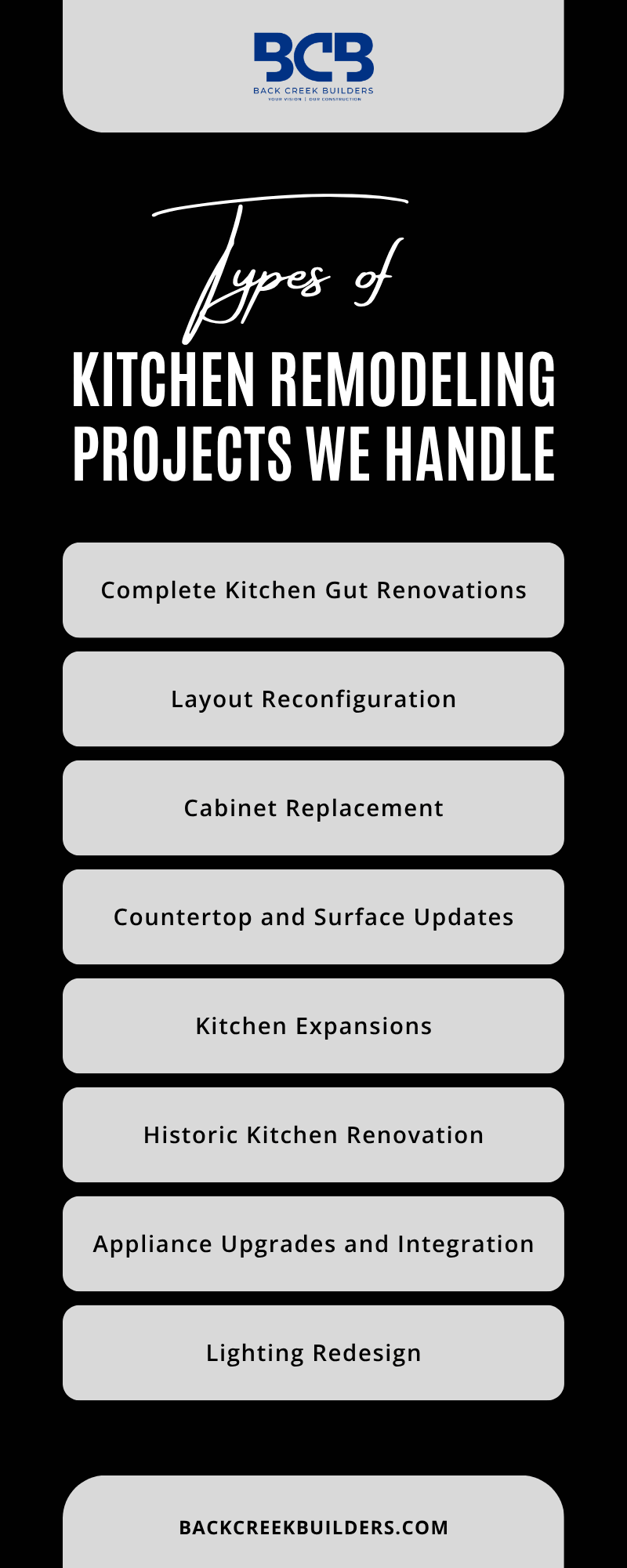
Types of Kitchen Remodeling Projects We Handle in Annapolis
 Kitchen renovations span a wide range of scope and complexity. We handle projects across the full spectrum.
- Complete Kitchen Gut Renovations. Everything changes. Cabinets, countertops, flooring, appliances, lighting, plumbing fixtures—all removed and replaced. Walls may move. Layouts reconfigure entirely. These projects deliver essentially new kitchens within existing homes.
- Layout Reconfiguration. Sometimes the kitchen footprint works but the arrangement doesn’t. Islands positioned where they impede traffic. Work triangles stretched across inefficient distances. Pantry storage inadequate for household needs. We redesign layouts to improve flow and function, relocating plumbing and electrical as required.
- Cabinet Replacement. Cabinets define a kitchen’s appearance and storage capacity more than any other element. Replacing outdated, damaged, or inefficient cabinets—whether with stock, semi-custom, or fully custom options—transforms both aesthetics and functionality. We coordinate cabinet installation with countertop templating and fabrication.
- Countertop and Surface Updates. Worn laminate giving way to granite, quartz, marble, or butcher block. Countertop replacement often pairs with new sinks, faucets, and backsplash tile. We coordinate fabrication, templating, and installation to ensure proper fit and finish.
- Kitchen Expansions. When the existing footprint cannot accommodate requirements, expanding into adjacent space may provide the answer. Absorbing a nearby dining room, bumping out into the backyard, or combining kitchen work with a larger home renovation. These projects involve structural considerations beyond typical remodeling.
- Historic Kitchen Renovation. Kitchens in historic Annapolis homes require approaches sensitive to the property’s character. Maintaining period-appropriate elements where visible while incorporating modern function where practical. Working with materials and methods appropriate to the home’s era while meeting current code requirements.
- Appliance Upgrades and Integration. Professional-grade ranges requiring upgraded gas lines and ventilation. Built-in refrigerators needing custom cabinet surrounds. Induction cooktops demanding electrical panel capacity that older homes lack. We coordinate appliance requirements with broader renovation scope.
- Lighting Redesign. Inadequate kitchen lighting affects both function and atmosphere. Recessed fixtures for general illumination, under-cabinet task lighting, pendants over islands, accent lighting in glass-front cabinets. Lighting work often accompanies broader remodeling but can also stand alone.
Important Aspects of Annapolis Kitchen Remodeling
Kitchen renovations involve technical requirements and practical considerations beyond selecting finishes.
- Permitting Requirements. Most kitchen remodels in Annapolis require permits when plumbing, electrical, or structural elements change. Moving a sink, adding circuits, removing walls—each triggers Anne Arundel County permit requirements. We handle applications and coordinate inspections throughout the project.
- Electrical Capacity. Modern kitchens demand substantial electrical loads. Refrigerators, dishwashers, disposals, microwaves, ovens, cooktops, vent hoods, under-cabinet lighting, island outlets—the demands accumulate quickly. Many older Annapolis homes require panel upgrades or additional circuits to support contemporary kitchen requirements safely. Electrical code compliance ensures both safety and inspection approval.
- Plumbing Considerations. Relocating sinks, adding prep sinks, moving dishwashers—each involves plumbing work that varies in complexity. Drain lines need proper slope. Vent connections follow code requirements. Supply lines require adequate pressure. Homes with slab foundations present particular challenges when plumbing relocation is needed.
- Structural Realities. Open floor plans often require removing walls. Some walls are load-bearing and demand engineering solutions—headers, posts, or beam systems—to maintain structural integrity. We assess which walls can change and how, ensuring modifications meet building code requirements while achieving design objectives.
- Ventilation Requirements. Cooking generates heat, moisture, smoke, and odors that proper ventilation removes. Range hoods need CFM ratings matched to cooktop output. Ductwork must route to the exterior—recirculating hoods don’t actually ventilate. Some installations require makeup air systems. We ensure ventilation functions correctly, not just appears to exist.
- Coastal Material Considerations. Annapolis humidity affects material selection. Certain woods expand and contract more significantly than others. Some finishes perform better in high-humidity environments. Hardware and fixtures need appropriate corrosion resistance. We specify materials rated for Chesapeake conditions.
- Timeline Expectations. Kitchen remodels typically require six to twelve weeks depending on scope. Custom cabinets need lead time for fabrication—often six to eight weeks. Countertop templating occurs after cabinet installation, adding another two weeks for fabrication. Appliance delivery schedules affect sequencing. We develop realistic timelines and communicate adjustments promptly.
- Budget Planning. Kitchen renovation costs in Annapolis vary substantially based on scope, materials, and existing conditions. Older homes often reveal surprises during demolition—inadequate wiring, plumbing issues, previous work now requiring correction. Realistic budgets include contingency to address discoveries without derailing projects.
Annapolis Kitchen Remodeling Infographic
What Are the Steps of the Kitchen Remodeling Process?
 Kitchen renovation follows a specific sequence. Each phase builds on completed work, making order and timing essential.
- Step 1: Initial Consultation. We discuss current kitchen deficiencies and desired improvements. Cooking patterns, household size, storage requirements, aesthetic preferences. This conversation establishes project direction and budget parameters.
- Step 2: Existing Kitchen Assessment. We evaluate current conditions—measuring precisely, documenting plumbing and electrical locations, noting structural elements, identifying potential challenges. What exists shapes what’s possible and influences cost projections.
- Step 3: Design Development. Layout options emerge based on priorities and site constraints. Cabinet configurations, appliance placement, work zones, storage solutions. Material selections refine—cabinet styles, countertop surfaces, backsplash options, hardware finishes. We iterate until the design addresses requirements within budget.
- Step 4: Selections and Ordering. Cabinet orders go to fabrication. Countertop materials are reserved. Appliances, fixtures, tile, lighting—all selected and ordered with lead times coordinated. Proper timing prevents construction delays when the space sits empty waiting for materials.
- Step 5: Permitting. Applications go to Anne Arundel County. We prepare documentation, manage submissions, and obtain approvals before demolition begins.
- Step 6: Pre-Construction Setup. Temporary kitchen arrangements are established. Dust barriers go up. Adjacent areas are protected. Work zones are defined. Your household understands what to expect and when.
- Step 7: Demolition and Discovery. Existing cabinets, countertops, flooring, and fixtures are removed. Walls open to reveal actual conditions. This phase often surfaces information affecting subsequent work—we communicate discoveries immediately and discuss implications.
- Step 8: Rough Construction. Structural modifications proceed first. Then plumbing relocation, electrical rough-in, HVAC adjustments. Inspectors verify this work before walls close. The infrastructure your new kitchen requires gets built correctly.
- Step 9: Finishes and Installation. Drywall repair and painting. Flooring installation. Cabinets installed, leveled, and adjusted. Countertop templating, fabrication, and installation. Backsplash tile. Fixtures and appliances connected. Lighting completed. The kitchen takes shape.
- Step 10: Final Details and Walkthrough. Hardware mounted. Doors and drawers adjusted for proper alignment. Final connections completed. Systems tested. We walk through together, demonstrating features and confirming everything meets expectations. Your new kitchen is ready for use.
Contact Back Creek Builders
If your Annapolis kitchen requires renovation—whether targeted updates or complete transformation—we would welcome the opportunity to discuss your project. Kitchen remodeling involves complexity that rewards working with contractors who understand both construction requirements and this specific market.
Contact us to schedule a consultation. Back Creek Builders brings the same standards to kitchen remodeling that we apply to bathroom renovation, new construction, and every project we undertake throughout Anne Arundel County.
Kitchen Remodeling Statistics in Annapolis, MD
 Annapolis homeowners invest heavily in their kitchens, and the numbers behind that trend are worth understanding. Much of the local housing stock is old, which shapes what a remodel involves and what it costs.
According to Census housing data, the median owned home in the United States was 41 years old as of 2021, and owners of homes built before 1950 spent a median of about $1,800 a year on upkeep, a category that includes remodeling a kitchen.
Recent buyers of those older homes spent more, a median near $3,900 annually. Demand has also held up. National remodeling data from the National Association of Home Builders shows home improvement spending rising more than 8 percent year over year, supported by strong homeowner equity. For an older market like Annapolis, MD, that pairing of aging homes and steady remodeling demand is a large part of why kitchen projects stay so common here.
Questions to Ask Before Hiring a Kitchen Remodeler in Annapolis
Choosing a contractor matters as much as choosing cabinets. The right questions up front reveal whether a company can handle the construction realities of an older Annapolis home, not just install finishes. Here is what we would ask before signing anything.
- Are you a licensed Maryland contractor? Maryland requires home improvement contractors to hold a Maryland Home Improvement Commission license. Ask for the license number and confirm it is current before any work starts.
- Do you carry insurance? General liability and workers’ compensation protect you if something goes wrong on your property. Ask to see current certificates, not a verbal assurance.
- Who handles the construction beyond cabinetry? Many kitchen companies subcontract the structural, electrical, and plumbing work. Ask whether the company can move a wall, upgrade a panel, or reroute plumbing directly, since older Annapolis kitchens often need all three.
- Can I see completed projects? A portfolio shows range and quality better than any sales pitch. We encourage clients to review our completed projects before deciding.
- Who runs my project day to day? You want a clear point of contact, not a rotating cast of subcontractors. Ask who makes the call when questions come up mid-project.
- How do you handle surprises in an older home? Opening walls in a home built decades ago often reveals outdated wiring or failing plumbing. Ask how the contractor prices and communicates those discoveries when they surface.
- Do you pull the permits? A reputable contractor manages permit applications and inspections rather than leaving them to you. Confirm that this is part of the scope.
- What does the payment schedule look like? Maryland law limits how much a contractor can take as a deposit. Ask for a written schedule tied to project milestones, not a large payment up front.
- Will you provide a written contract? Every detail, from materials to timeline, belongs in writing. A clear contract protects both sides and prevents disputes later.
- How do you protect the rest of my house? Dust and debris travel. Ask how the crew contains the work zone and shields floors and adjoining rooms while the kitchen is torn apart.
Good contractors welcome these questions. At Back Creek Builders LLC, we answer them directly, because a homeowner who understands the process is easier to work with and happier when the work is done.
Annapolis Kitchen Remodeling FAQs
What drives the cost of a kitchen remodel in Annapolis?
Scope, materials, and the condition of the existing space all move the number. A cabinet-and-countertop refresh costs far less than a gut renovation that relocates plumbing and reworks the layout. Older Annapolis homes can add cost when demolition uncovers outdated wiring or worn plumbing. We provide an itemized estimate after seeing the kitchen, and consultations are free.
Do I need a permit to remodel my kitchen?
Usually, yes. Any change to plumbing, electrical, or structure triggers a permit. Homes in unincorporated Anne Arundel County are permitted through the county, while properties inside Annapolis city limits may also involve City review. Our team will prepare the applications and coordinate inspections so the project stays compliant from start to finish.
Can you remodel a kitchen in a historic district home?
Yes. Interior kitchen work in a historic home is generally flexible, while changes visible from the exterior may require review by the City’s Historic Preservation Commission. We can identify what applies early, before the design is final, so approvals do not stall the work.
Do you handle bathrooms and other rooms too?
Yes, we do! Kitchens are one part of our work. We also handle bathroom remodeling, basement finishing, and full home renovation across Annapolis. Combining projects under one contractor keeps scheduling and accountability simple.
How can I get a strong return on a kitchen remodel?
Focus on layout, quality, and choices that hold up rather than trends that date quickly. Planning a remodel that adds real value starts with function, and durable kitchen cabinets anchor both the look and the budget.
Can you expand a kitchen that is too small?
Yes. When the current footprint cannot hold what you need, we expand into adjacent space or build out. That may mean planning an addition, or in some cases folding the kitchen into new home construction if you are building from the ground up.
Do you offer design help, or do I need my own designer?
We are a construction company first, and we build from a plan, whether it is yours, an architect’s, or a kitchen designer’s. If you already have a design, we run with it. If you don’t, we are glad to work alongside a designer you bring in, and for a larger kitchen we’d encourage it. An interior designer carries a different skillset than a builder, and investment in both often pays off in a smarter, more livable layout.
Are you licensed and insured?
Yes. Maryland requires home improvement contractors to be licensed, and we work as a licensed, insured Maryland contractor. You can confirm any contractor’s license with the state before hiring.
What should I have ready for a consultation?
Bring photos of the current kitchen, a rough budget range, and examples of layouts or finishes you like. If your home is in a community association, any relevant rules help too. We use the first meeting to understand how you cook and live, then explain how a project like yours would proceed.
Is it worth remodeling an older Annapolis kitchen rather than replacing it?
In most cases, yes. A sound older home with good bones usually justifies a kitchen investment, and updating the layout, systems, and finishes brings it in line with how families cook today. The exception is a kitchen with failing structure or systems throughout, where we will tell you honestly whether a larger renovation makes more sense than a standalone kitchen project.
Local Information for Annapolis Kitchen Remodeling
Permitting and Historic Review in Annapolis
Kitchen projects in the Annapolis area answer to more than one authority depending on where the home sits. Properties in unincorporated Anne Arundel County are permitted and inspected through the county, which reviews plumbing, electrical, and structural work against the building code.
Homes inside Annapolis city limits, especially in the historic district, may also fall under City review, including the Historic Preservation Commission for exterior-visible changes. Knowing which rules apply before design is finalized keeps a kitchen remodel from stalling at approval. We manage this coordination for our clients as part of every project.
What Are Important Local Resources for Annapolis Kitchen Remodeling?
The offices below handle the permitting, licensing, and preservation questions that come up during an Annapolis kitchen remodel.
- Anne Arundel County permits, Permit Center, (410) 222-7730. Processes building permits and inspections for properties in the county.
- Maryland Home Improvement Commission, (410) 230-6231. Licenses home improvement contractors and lets homeowners verify a license before hiring.
- Annapolis Historic Preservation, (410) 260-2200. Reviews exterior changes to properties within the Annapolis Historic District.
Back Creek Builders LLC lists these resources for informational purposes only and does not endorse or claim any affiliation with them.
About Back Creek Builders LLC
Back Creek Builders LLC is a full-service construction company serving Annapolis and the surrounding region. Alongside its co-founders, partner Dave Stockum brings experience on complex, high-end projects that have exceeded three million dollars in value, and our founders Eric Young and Jason Gelblum stay involved in the work directly. Kitchen remodeling is one part of our broader residential construction practice, and we collaborate closely with each client from planning through completion.
What Our Clients Say
⭐⭐⭐⭐⭐
“Back Creek Builders are great guys…professional, accommodating, and detail oriented. Their work is pristine and they truly know how to handle every aspect of a home. Highly recommend!!”
-Lili Sutton
Read more reviews on our Google Business Profile.
Contact Back Creek Builders LLC
A kitchen remodel is a significant project, and the right contractor makes it a manageable one. Whether you are planning a targeted update or a full renovation of an older Annapolis kitchen, Back Creek Builders LLC brings construction depth and hands-on partners to the work. Consultations are free, and we respond to new inquiries promptly and schedule at a time that suits you. Contact us to talk through your kitchen, and we will walk you through the process and the next steps.
Meet Our Team

Jason Gelblum
Jason Gelblum co-founded Back Creek Builders and serves as Chief Operating Officer, managing operations, client relationships, and project coordination across the company's portfolio. He brings roughly nine years of professional experience spanning leadership roles, real estate, operations, and construction management.

Eric Young
Eric Young co-founded Back Creek Builders and serves as President, overseeing construction planning and project execution across the company's residential and sport court work. His background spans real estate development and hands-on construction management, giving him a perspective on projects from initial land evaluation through final walkthrough.

David Stockum
David Stockum is a partner at Back Creek Builders who brings deep experience in residential and commercial restoration, operations, and construction management. He’s known for turning complex projects into well-coordinated builds, standardizing processes, and keeping communication clear so work is delivered on time, on budget, and to a high standard.