New Home Construction Annapolis, MD
Building in Annapolis means building within a specific context. Waterfront lots with bulkhead considerations. Historic district adjacencies where design review adds complexity. Established neighborhoods with architectural expectations set by surrounding homes. Flood zones that affect foundation choices and insurance requirements. These factors shape what’s possible and how projects proceed.
They also separate builders who know this area from those learning on your project.
A new home represents years of planning, significant investment, and expectations about how your life will unfold within those walls. The construction process shouldn’t involve discovering that your builder doesn’t understand Anne Arundel County permitting, hasn’t worked with the Critical Area Commission, or is surprised by the soil conditions common to Chesapeake-adjacent properties.
At Back Creek Builders, we construct custom homes for clients throughout the Annapolis area. Our Annapolis, MD new home construction reflects deep familiarity with local conditions, regulations, and building practices specific to this part of Maryland. Reach out to discuss what you’re planning.
Why Choose Back Creek Builders for New Home Construction in Annapolis?
Local Knowledge That Affects Every Phase
Annapolis isn’t a generic market. Building here involves considerations that don’t apply elsewhere—or apply differently.
Properties within the Critical Area face additional environmental review. Historic Annapolis Foundation design guidelines affect projects near protected structures. Anne Arundel County stormwater management requirements have become increasingly stringent. Waterfront lots involve bulkheads, riprap, and sometimes Army Corps permits. Soil conditions in low-lying areas near the Severn and South Rivers create foundation challenges that inland sites don’t present.
Eric Young and Jason Gelblum founded Back Creek Builders with roots in this area. Eric serves as President, bringing real estate development and construction planning experience. Jason operates as Chief Operating Officer with roughly nine years across leadership and project management. Baltimore Magazine has featured their work on custom homes and sport courts throughout the region.
That local foundation means we understand how Annapolis projects differ from construction elsewhere in Maryland. Permit timelines. Review board expectations. The contractors and suppliers who deliver reliably in this market. Knowledge that only comes from building here consistently.
Design That Fits the Setting
Annapolis neighborhoods carry distinct architectural characters. Colonial and Georgian influences in historic areas. Contemporary waterfront homes maximizing Chesapeake views. Traditional estates in communities like Wardour and Gibson Island. Each setting creates expectations about what belongs.
We design homes that respond to their context. Not formulaic reproductions, but thoughtful interpretations that respect surroundings while reflecting your priorities. The goal is a home that looks intentional within its neighborhood—not transplanted from somewhere else.
Our design consultation process explores how site characteristics, neighborhood context, and your requirements intersect. See how we’ve handled different Annapolis contexts in our portfolio.
Waterfront Building Experience
Many Annapolis properties involve water proximity. Building near the Chesapeake, its tributaries, or tidal wetlands triggers requirements that inland construction doesn’t face.
Critical Area regulations restrict clearing and impervious surfaces within 1,000 feet of tidal waters. Flood zone construction affects foundation design, elevation requirements, and insurance considerations. Waterfront lots may involve existing bulkheads needing assessment or replacement, shoreline stabilization, and coordination with Maryland Department of Natural Resources.
We’ve built on waterfront sites throughout Anne Arundel County. That experience means understanding what questions to ask early, which agencies need to approve what, and how to structure projects so regulatory requirements don’t create surprises mid-construction.
Quality Construction Standards
Custom home construction should last generations. The choices made during construction—structural systems, building envelope details, mechanical equipment, finish quality—determine whether a home performs well for decades or requires ongoing remediation.
We partner with suppliers whose products hold up over time. Pella windows and doors. James Hardie exterior materials. Kohler fixtures. Ferguson Home for plumbing and hardware. Sherwin Williams finishes. These relationships reflect years of evaluating what performs in Chesapeake coastal conditions.
Beyond materials, construction practices matter. Proper air sealing and insulation. Correctly detailed flashing. Adequate structural connections for wind loads. These details don’t photograph well, but they determine long-term performance.
What Our Clients Say
⭐⭐⭐⭐⭐
“We had a great experience with Back Creek Builders. Jason and Eric were a pleasure to work with and were extremely attentive throughout the entire project. They were easy to communicate with and truly cared about the final result.” — Alyssa Piera
Read more reviews on our Google Business Profile.
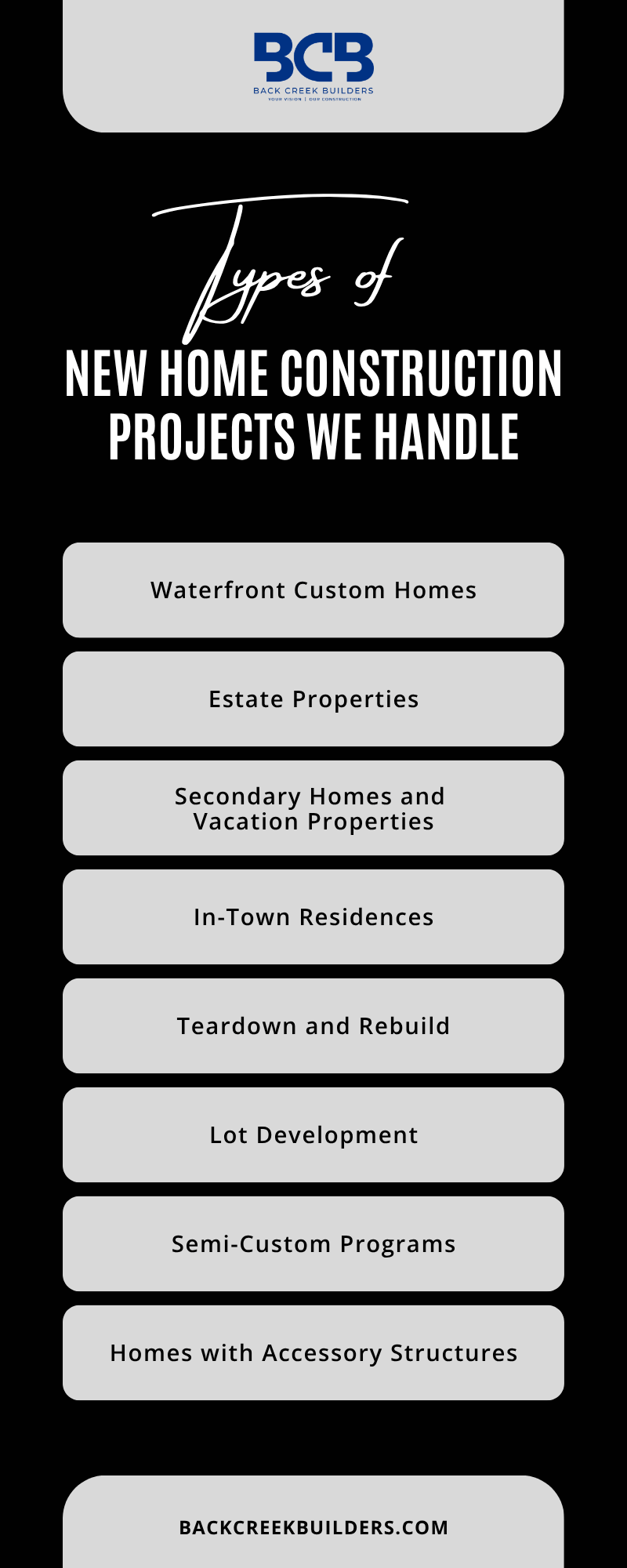
Types of New Home Construction Projects We Handle in Annapolis
 Custom home projects vary significantly based on site, scope, and client objectives. We work across the full range.
Waterfront Custom Homes. Properties on the Chesapeake Bay, Severn River, South River, and their tributaries. These sites command premium values and warrant construction quality to match. Design maximizes water views. Construction addresses flood considerations, coastal exposure, and environmental regulations. We understand the particular requirements of building where land meets water.
Estate Properties. Larger lots in communities like Arden on the Severn, Wardour, and areas of the Broadneck Peninsula. Homes of significant scale with proportional site amenities—pools, sport courts, guest houses, extensive landscaping. These projects require coordination across multiple elements and extended construction timelines.
Secondary Homes and Vacation Properties. Annapolis attracts buyers seeking weekend retreats, seasonal residences, and vacation homes within reach of Washington, Baltimore, and the broader Mid-Atlantic region. Building for part-time occupancy introduces specific considerations—low-maintenance materials, systems designed for intermittent use, security features for extended absences, and sometimes property management integration. We design secondary homes that welcome you whenever you arrive without demanding constant attention when you’re away.
In-Town Residences. Properties within Annapolis city limits and adjacent areas. Smaller lots, closer neighbors, potentially historic district adjacency. These sites require designs sensitive to density and architectural context while maximizing functionality within constrained footprints.
Teardown and Rebuild. Acquiring properties with obsolete structures and replacing them with new construction. This approach provides new-home quality on established lots in desirable neighborhoods. Demolition, site preparation, and construction proceed in coordinated sequence.
Lot Development. Clients purchasing vacant lots and building from scratch. Site work may include clearing, grading, utility connections, driveway installation, and stormwater management before home construction begins. We manage the full development sequence from raw land to completed home.
Semi-Custom Programs. Some clients prefer starting from established floor plans rather than ground-up custom design. We offer semi-custom options where proven layouts are adapted to specific sites and personalized through finish selections, modifications, and upgrades.
Homes with Accessory Structures. Properties accommodating detached garages, workshops, in-law suites, pool houses, or other secondary buildings. These compound-style developments require coordinated planning across multiple structures.
Important Aspects of Annapolis New Home Construction
Building a custom home in Annapolis involves considerations specific to this market and location.
Permitting and Review Processes. Anne Arundel County building permits are baseline requirements. Properties in certain areas face additional review—Critical Area Commission for waterfront sites, design review for historic districts, HOA architectural committees in covenant-controlled communities. Understanding which approvals apply to your site prevents surprises. County building department requirements establish minimum standards.
Critical Area Regulations. Maryland’s Critical Area law restricts development within 1,000 feet of tidal waters and wetlands. Clearing limits, impervious surface caps, and buffer requirements affect what can be built and where. Properties entirely within the Critical Area face the most stringent requirements. We evaluate Critical Area implications during initial site assessment.
Flood Zone Considerations. Many Annapolis-area properties fall within FEMA-designated flood zones. Flood zone classification affects foundation requirements, finish floor elevations, insurance costs, and sometimes financing. Understanding flood zone status early shapes design decisions from the outset.
Soil and Foundation Conditions. Soil types vary across Anne Arundel County. Sandy soils near waterways. Clay-heavy areas that expand and contract seasonally. High water tables in low-lying locations. Soil conditions affect foundation design, drainage requirements, and sometimes construction methods. Geotechnical evaluation informs appropriate structural approaches.
Utility Availability. Not all Annapolis-area properties have public water and sewer access. Some require wells and septic systems. Available electrical capacity varies. Natural gas isn’t universally available. Understanding utility status affects site selection and home design. Connection costs vary significantly based on distance from existing infrastructure.
Coastal Exposure. Proximity to the Chesapeake means exposure to coastal weather conditions. Salt air accelerates corrosion on certain materials. Wind loads exceed inland standards. Humidity affects building envelope performance. Material specifications and construction details must account for these conditions.
Energy Performance. Building code requirements establish minimum energy standards, but custom homes can exceed minimums significantly. Insulation levels, window specifications, air sealing details, HVAC system efficiency—each decision affects long-term operating costs and comfort. We discuss energy performance options during design.
Construction Timeline. Custom homes in Annapolis typically require twelve to eighteen months from groundbreaking to completion, depending on size and complexity. Permit timelines add weeks or months before construction begins. Weather affects scheduling, particularly for exterior work during winter months. We develop realistic schedules and communicate adjustments as projects progress.
Annapolis New Home Construction Infographic
What Are the Steps of the New Home Construction Process?
 Building a custom home proceeds through defined phases. Each builds on work completed previously.
Step 1: Initial Consultation. We discuss your vision, priorities, budget parameters, and timeline. If you have a lot, we talk about its characteristics. If you’re still looking, we discuss what to evaluate in potential sites. This conversation establishes whether we’re the right fit for your project.
Step 2: Site Evaluation. For properties you own or are considering, we assess conditions affecting construction. Topography, soil indicators, drainage patterns, utility access, regulatory overlays. Site characteristics shape design possibilities and construction approach. Better to understand constraints before design investment than after.
Step 3: Design Development. Working with you—and with architects when project scope warrants—we develop home designs responding to site conditions and your requirements. Floor plans evolve through iterations. Exterior design takes shape. Material palettes emerge. The design refines until it satisfies both vision and budget.
Step 4: Specifications and Budgeting. Detailed specifications document exactly what gets built. Material selections are finalized. Systems are specified. These specifications form the basis for accurate construction budgets. When estimates exceed targets, we identify modifications that align scope with budget while preserving priorities.
Step 5: Permitting and Approvals. Applications go to Anne Arundel County and any other required review bodies. We prepare documentation, manage submissions, respond to reviewer comments, and obtain approvals. Permit timelines vary based on project complexity and current county workload.
Step 6: Pre-Construction Planning. Before breaking ground, subcontractor agreements are finalized, material deliveries are scheduled, and site logistics are planned. Thorough pre-construction preparation prevents delays once work begins.
Step 7: Site Work and Foundation. Clearing, excavation, and grading prepare the building site. Foundation construction establishes the structural base. Waterproofing and drainage systems protect below-grade elements. Utilities are roughed to the building location.
Step 8: Framing and Exterior. Structural framing rises. Roof systems are completed. Windows and exterior doors are installed. Weather-resistant barriers and exterior finishes follow. The home becomes enclosed and protected from weather.
Step 9: Mechanical Systems. Plumbing, electrical, and HVAC rough-in happens while walls remain open. Systems are installed according to design specifications. Inspections verify code compliance before insulation and drywall close wall cavities.
Step 10: Interior Finishing. Insulation, drywall, painting, flooring, cabinetry, countertops, tile work, trim carpentry, fixture installation. The construction site transforms into a finished home. Quality control inspections occur throughout.
Step 11: Final Completion. Punch list items are addressed. Final inspections are passed. Systems are tested and commissioned. Landscaping is completed. We conduct a thorough walkthrough, explain home systems, and hand over keys to your completed home.
Contact Back Creek Builders
If you’re planning to build a new home in Annapolis or Anne Arundel County, we’d welcome the opportunity to discuss your project. Whether you have a lot ready for development or are still evaluating options, early conversation helps clarify possibilities and establish realistic expectations.
Contact us to schedule a consultation. Back Creek Builders brings the same quality standards to new home construction that we apply to home renovations, kitchen remodeling, and every project we undertake throughout the area.
Types Of New Home Construction Projects We Handle
 Building a home from the ground up gives homeowners the chance to shape how they live day to day, but you’ll need your Annapolis, MD new home construction contractor on your side. At Back Creek Builders LLC, we take on a wide range of residential build projects, working closely with clients from early planning through final walkthrough. With over 10 years of experience in home renovation and commercial construction, we’re ready to make your project a reality. Read on to see the services we offer for new home construction, and contact us today to get started.
Custom Homes
If you need residential home building, we can build fully custom homes designed around your layout, style, and budget. From floor plans to finishes, we work with you to create a home that reflects how you want to live.
Semi Custom Homes
For clients who want flexibility without starting from scratch, we offer semi custom builds. You can choose from proven layouts and adjust features to better match your preferences.
Luxury Homes
Your Annapolis new home construction contractor can handle high-end residential builds that include larger footprints, detailed finishes, and upgraded materials. These projects often involve more planning and coordination to meet design goals.
Energy Efficient Homes
We construct homes with a focus on energy savings and long-term performance. This may include better insulation, updated HVAC systems, and smart design choices that reduce utility costs.
Modern Style Homes
For clients interested in clean lines and open layouts, we build modern-style homes with simple forms and functional spaces. These projects often focus on natural light and efficient use of square footage, so we’ll help you with designing, planning, and execution alike.
Traditional Style Homes
We also build homes with classic layouts and design elements. These builds often include defined rooms, familiar rooflines, and timeless exterior features.
Multi Family Residential Builds
Custom home projects don’t have to be strictly single-family. We take on multi-family projects such as duplexes and small apartment-style buildings. These projects require careful planning to balance shared spaces with private living areas.
Vacation And Second Homes
We build homes designed for seasonal use or weekend stays. These projects often focus on low maintenance materials and layouts that make it easy to relax and host guests.
Infill Homes
If you want to build a custom home from scratch on an existing lot within developed areas, we handle infill projects that must fit within zoning rules and surrounding structures. These builds often require thoughtful site planning.
Rural And Large Lot Homes
We work on homes located on larger or more remote properties. These projects may include longer driveways, utility planning, and site preparation before building begins.
Contact Us Today
No matter the type of project, we keep communication clear and the process organized from start to finish. If you are planning a residential build and want a team that will keep things straightforward and on track, reach out to the team at Back Creek Builders LLC today to get started on your Annapolis new home construction project.
Meet Our Team

Jason Gelblum
Jason Gelblum co-founded Back Creek Builders and serves as Chief Operating Officer, managing operations, client relationships, and project coordination across the company's portfolio. He brings roughly nine years of professional experience spanning leadership roles, real estate, operations, and construction management.

Eric Young
Eric Young co-founded Back Creek Builders and serves as President, overseeing construction planning and project execution across the company's residential and sport court work. His background spans real estate development and hands-on construction management, giving him a perspective on projects from initial land evaluation through final walkthrough.
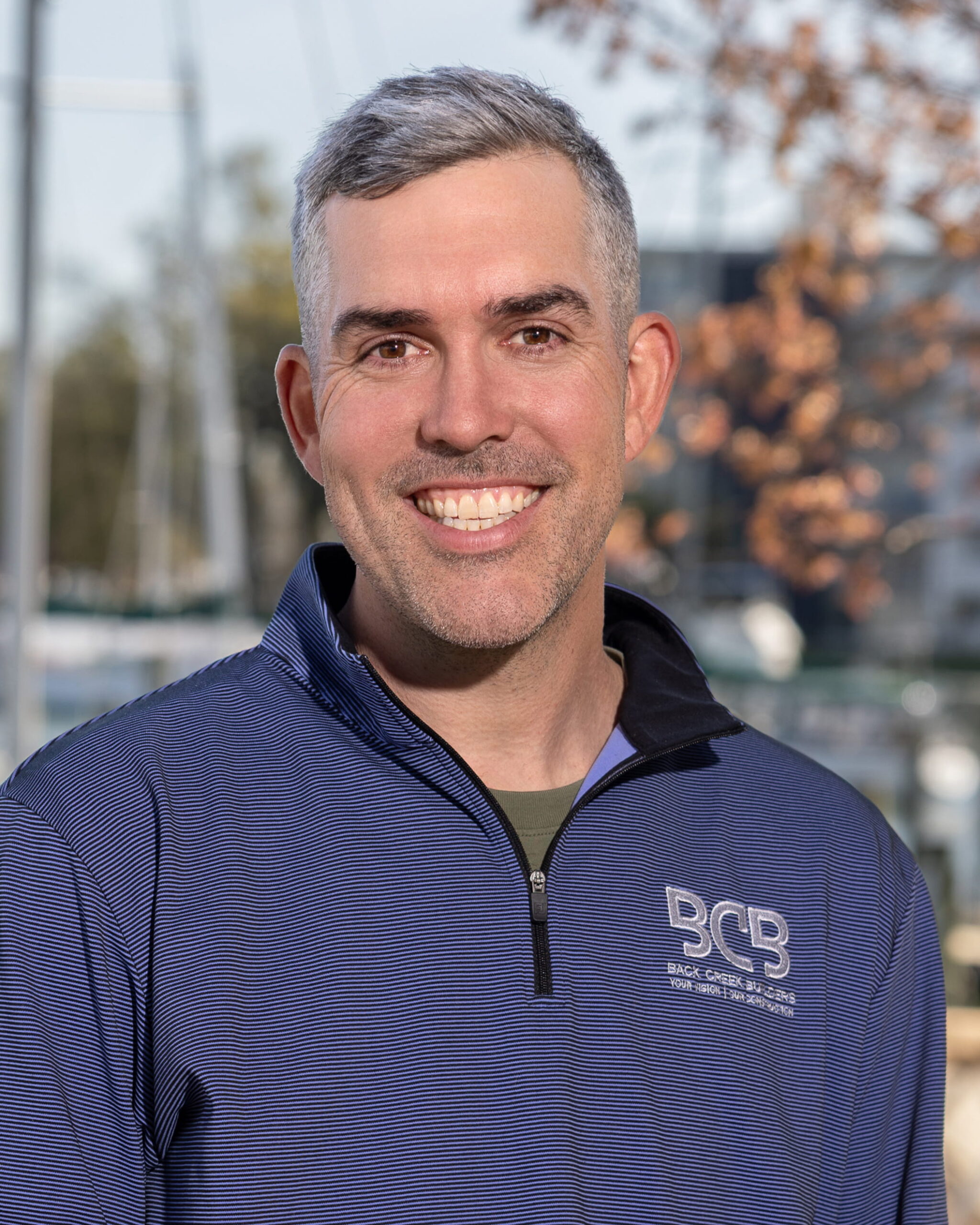
David Stockum
David Stockum is a partner at Back Creek Builders who brings deep experience in residential and commercial restoration, operations, and construction management. He’s known for turning complex projects into well-coordinated builds, standardizing processes, and keeping communication clear so work is delivered on time, on budget, and to a high standard.