
A well-designed outdoor space extends your home in ways that square footage alone can’t capture. Morning coffee on a stone patio. Dinner cooked and served steps from your back door. Evening conversations around a fire pit while the kids play in the yard. These moments add up to a different kind of daily life.
At Back Creek Builders, we design and construct outdoor living spaces that function as true extensions of the home. Patios, decks, outdoor kitchens, fire features, pergolas, poolside entertaining areas—we handle the full scope. Our outdoor living spaces work integrates with our broader residential construction experience, which means we understand how these projects connect to the house itself. We’re not just building a patio. We’re changing how you use your property. Reach out to talk through what you’re envisioning.
Why Choose Back Creek Builders for Outdoor Living Spaces?
Builders Who Understand the Whole Picture
Plenty of contractors install pavers or build decks. Fewer understand how outdoor spaces relate to the home’s architecture, drainage patterns, utility access, and long-term property value.
That’s where our background matters. Eric Young and Jason Gelblum founded Back Creek Builders with experience in real estate development and residential construction. Eric serves as President—his work spans real estate, development, and hands-on construction planning. Jason runs operations as Chief Operating Officer, bringing roughly nine years across leadership, real estate, and project management. Baltimore Magazine has featured their work on custom homes and sport courts.
That foundation shapes how we execute outdoor living projects. We’re thinking about how the patio ties into the kitchen addition you might want in five years. How drainage will work when that outdoor kitchen sends grease and water somewhere. How electrical loads for lighting and appliances affect your panel. The details that contractors focused only on hardscape tend to miss.
Design That Reflects How You Actually Live
Some families want a quiet retreat. Others want a full outdoor entertainment venue. Some cook elaborate meals outside. Others just want somewhere comfortable to sit after work.
We start every project by understanding how you’ll actually use the space. Not what looks good in a magazine—what works for your family, your property, your climate. Our design consultation process builds from there. You might arrive with detailed plans from a landscape architect. Or a Pinterest board and some rough ideas. We work either direction.
Our portfolio shows the range, from simple patios to elaborate outdoor rooms with kitchens, bars, fireplaces, and integrated sound systems. Every project reflects the specific homeowner and property.
Quality Construction That Holds Up
Outdoor spaces take a beating. Varying weather doesn’t help – summer humidity, winter freeze-thaw cycles, spring downpours. Materials and construction methods have to account for all of it.
We’re particular about what we use. Paver systems with proper base preparation and drainage. Framing lumber rated for ground contact and moisture exposure. Stone and tile rated for exterior freeze-thaw applications. Stainless steel hardware that won’t corrode. These aren’t glamorous choices, but they determine whether your outdoor living space looks good in ten years or starts falling apart in three.
Integration With Pools and Courts
Many clients want outdoor living spaces that connect to other backyard features. A patio that wraps around a new pool. A deck with sightlines to a sport court. An outdoor kitchen positioned between the house and the pool house.
Because we build pools and courts ourselves, coordination is straightforward. Same team, same standards, same project management. No finger-pointing between contractors when something doesn’t line up.
What Our Clients Say
⭐⭐⭐⭐⭐
“We had a great experience with Back Creek Builders. Jason and Eric were a pleasure to work with and were extremely attentive throughout the entire project. They were easy to communicate with and truly cared about the final result.” — Alyssa Piera
Read more reviews on our Google Business Profile.
Types of Outdoor Living Spaces Projects We Handle
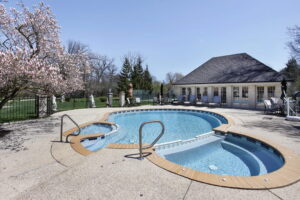 Outdoor living covers a lot of ground. Simple patios. Elaborate multi-zone entertainment areas. Everything in between. We adapt scope and approach to what each homeowner actually wants.
Patios. The foundation of most outdoor living spaces. We build patios using natural stone, pavers, stamped concrete, and flagstone—materials selected based on aesthetics, budget, and how they’ll perform in your specific conditions. Proper base preparation and drainage are critical. A patio that holds water or shifts over time isn’t worth much regardless of how nice the surface looks.
Decks. Elevated outdoor spaces that work where grade changes make patios impractical, or when you want that particular feel of a raised wooden platform. We build with pressure-treated lumber, cedar, tropical hardwoods, and composite materials. Each has tradeoffs in cost, maintenance, appearance, and longevity. Multi-level decks can create distinct zones for dining, lounging, and grilling.
Outdoor Kitchens. From simple grilling stations to full kitchens with refrigeration, sinks, burners, pizza ovens, and storage. Outdoor kitchens require utility connections—gas, water, electric—and proper ventilation and drainage. Counter materials need to withstand weather and temperature swings. We work with you to design a kitchen that matches how you actually cook outdoors, not just what fits a template.
Fire Features. Fire pits, fireplaces, fire tables. Wood-burning or gas. Built into patios or standing alone. Fire extends the usable season into cooler months and creates a natural gathering point. We design fire features that integrate with surrounding hardscape and meet local codes for clearances and ventilation.
Pergolas and Shade Structures. Defined overhead structure without full enclosure. Pergolas create architectural interest and filtered shade. Add retractable canopies or climbing plants for more coverage. We build freestanding pergolas and structures attached to the house, depending on your layout and preferences.
Covered Outdoor Rooms. Full roof structures that provide protection from sun and rain. These spaces can include ceiling fans, lighting, heaters, screens, and even weatherproof televisions. A covered outdoor room functions almost like interior square footage—usable in weather that would send you inside from an uncovered patio.
Poolside Living Areas. Patios, decks, and outdoor kitchens designed specifically around pool environments. Materials need to handle splash exposure and bare feet. Drainage has to manage pool water without creating puddles. Sightlines matter for supervising swimmers. We coordinate poolside living spaces with pool construction or work with existing pools.
Complete Backyard Transformations. Some projects involve all of the above. Patio with outdoor kitchen, pergola over the dining area, fire pit zone, pathway to the pool, deck off the primary bedroom. We design and build comprehensive outdoor environments where different areas flow together while serving distinct purposes.
Important Aspects of Outdoor Living Spaces
Building outdoor living spaces involves more than selecting materials and arranging furniture. Several factors affect design, construction, and long-term satisfaction.
Permits and Regulations. Most outdoor living projects require permits. Decks, structures over a certain size, outdoor kitchens with utility connections, anything attached to the house—all trigger permit requirements. Setback rules determine how close you can build to property lines. Some jurisdictions regulate impervious surface coverage. We handle permit applications and ensure your project meets local code requirements.
Drainage and Grading. Water has to go somewhere. Poorly planned outdoor spaces create drainage problems that affect the patio, the yard, even the house foundation. We design grading and drainage systems that move water away from structures and prevent pooling on hardscape surfaces. This isn’t the exciting part of outdoor living design, but it’s often the most important.
Utility Requirements. Outdoor kitchens need gas lines, water supply, drainage, and electrical circuits. Lighting systems require proper wiring. Fire features may need gas connections. Sound systems, heaters, televisions—all add electrical load. We plan utility routing during design so installation doesn’t create problems or require expensive workarounds later.
Material Selection. Every material involves tradeoffs. Natural stone costs more than pavers but offers unique aesthetics. Composite decking requires less maintenance than wood but feels different underfoot. Stainless steel appliances hold up better than painted steel but cost more. We help you understand the tradeoffs and select materials that match your priorities and budget.
Climate Considerations. Maryland’s climate creates specific challenges. Freeze-thaw cycles crack improperly installed stone. Summer humidity promotes mold on wood surfaces. UV exposure fades certain materials faster than others. We select and install materials rated for our regional conditions and follow best practices that account for local weather patterns.
Future Flexibility. Your needs may change. Kids grow up. You might add a pool later. Your entertaining style might evolve. Good design anticipates some of this—electrical conduit stubbed out for future lighting, space reserved for a potential fire feature, drainage planned for a pool that doesn’t exist yet. We think about where you might be in five or ten years, not just today.
What Are the Steps of the Outdoor Living Spaces Process?
 Every project follows a general sequence, though complexity and timeline vary based on scope.
Step 1: Initial Consultation. We meet to discuss what you’re hoping to create, how you want to use the space, and what budget range you have in mind. We’ll talk through your property’s opportunities and constraints, and you’ll get a sense of whether we’re the right fit.
Step 2: Site Evaluation. We visit your property to assess existing conditions—grade changes, drainage patterns, sun exposure, views, access points, utility locations. This evaluation shapes what’s possible and influences design direction.
Step 3: Design Development. Working with you, we develop plans that translate your vision into something buildable. This includes layout, materials, features, lighting, and how the space connects to your home and yard. We revise until the design feels right.
Step 4: Detailed Proposal. We provide a comprehensive proposal covering scope, specifications, materials, timeline, and cost. No surprises buried in fine print. Once we agree on terms, we move toward construction.
Step 5: Permitting. We prepare and submit permit applications to your local jurisdiction, respond to any reviewer questions, and obtain approvals before breaking ground.
Step 6: Site Preparation. Existing materials are removed if necessary. Grading establishes proper slopes for drainage. Utility trenches are excavated. The site is prepared to receive new construction.
Step 7: Base and Structural Work. For patios, this means base layers of compacted aggregate. For decks, it means footings, posts, and framing. Pergolas and shade structures go up. This phase establishes the bones of your outdoor space.
Step 8: Utility Installation. Gas lines, water supply, drainage, and electrical wiring are installed before surfaces close them in. Everything is tested before we proceed.
Step 9: Surfaces and Features. Pavers, stone, or decking go down. Countertops, appliances, fire features, and built-in elements are installed. The space starts looking like what you envisioned.
Step 10: Final Details and Walkthrough. Lighting, furniture placement, plantings around the perimeter, final grading, cleanup. We walk through the finished space together, address any remaining items, and hand it over for you to enjoy.
Contact Back Creek Builders
If you’ve been thinking about transforming your backyard into something more functional, we’d like to hear about it. Whether you want a simple patio for weekend relaxation or a complete outdoor living environment with kitchen, fire features, and pool integration—we handle projects across that entire spectrum.
Contact us to schedule a consultation. Back Creek Builders brings the same quality to outdoor living spaces that we bring to custom homes and major renovations.
Outdoor Living Spaces Statistics
 Outdoor living has held its position as one of the most requested features in residential design for several years running, and the data backs up what we see in consultations every week across Maryland.
Architects nationally are seeing the same pattern homeowners describe locally: the backyard isn’t an afterthought anymore, it’s treated as square footage worth designing carefully, right alongside a kitchen remodel or a room addition.
- Outdoor living space, covered outdoor areas, and outdoor “rooms” ranked as the top exterior feature category in the AIA Home Design Trends Survey, with 55% of architecture firms reporting increasing popularity in 2025.
- That figure was even higher the year before, at 60% in 2024, per the same AIA report.
- Outdoor living ranked as a top special-room request at 40% in the AIA’s Q3 2025 survey, trailing only ADU and in-law suite requests, according to AIA’s Q3 findings.
Demand cooling slightly from one year’s peak doesn’t mean the category is losing relevance. Outdoor living has stayed at or near the top of exterior feature rankings for multiple years running, which points to a durable shift in how homeowners think about their property rather than a short-term trend that fades once the next design fad arrives.
Factors That Affect the Cost of an Outdoor Living Project
Two outdoor living projects that read as similar on paper can land at very different price points once construction actually starts. A few variables tend to drive most of that difference, and knowing them upfront makes budget conversations far more productive.
- Material choice. Natural stone, pavers, stamped concrete, and composite decking all carry different price points, and the gap between the cheapest and most premium options within a single category can be significant on its own.
- Utility connections. An outdoor kitchen with gas, water, and dedicated electrical service costs meaningfully more than one built around a simple grill station with no plumbing.
- Grade and site conditions. A flat, easily accessible lot costs less to build on than a sloped yard requiring retaining walls, extensive grading, or engineered drainage.
- Covered versus open structures. A full roof structure with electrical, lighting, and possibly heating adds cost beyond an open patio or a simple pergola.
- Scope of the project. A single patio costs far less than a complete backyard transformation involving multiple zones, features, and phases of construction spread across a full season.
- Permitting complexity. Projects near tidal water, in historic districts, or subject to HOA architectural review often carry added design and approval costs beyond the construction itself, sometimes extending the timeline as much as the budget.
- Integration with existing features. Connecting new construction to an existing pool, sport court, or home addition requires coordination that a standalone project doesn’t, since the schedules and trades of two projects have to line up rather than just one.
Outdoor Living Spaces FAQs
How much does an outdoor living space cost?
Cost depends heavily on scope, materials, and whether utilities are involved. As a full-service residential construction company, we provide real numbers after evaluating your property and goals rather than a generic per-square-foot estimate that doesn’t reflect your actual site conditions.
Do I need a permit to build a patio or deck?
In most cases, yes, particularly for anything attached to the house, above a certain height, or involving utility connections. Some smaller, freestanding patios may not require a permit, but it’s worth confirming before starting since the threshold varies by jurisdiction.
How long does an outdoor living project take to build?
Timelines vary significantly based on scope. A simple patio might take a few weeks, while a complete backyard transformation with multiple features can take considerably longer, especially once permitting and utility coordination are factored into the schedule.
Can you build an outdoor kitchen that connects to my existing pool area?
Yes. Poolside kitchens and living areas require materials rated for splash exposure and drainage planning that keeps pool water from pooling on the hardscape. Since we build pools ourselves, partner Dave Stockum often coordinates these combined projects directly rather than handing off between separate contractors.
What’s the difference between a patio and a deck?
A patio sits at or near ground level, typically built from stone, pavers, or concrete. A deck is an elevated structure, usually built from wood or composite materials, used where grade changes make a ground-level patio impractical.
Do you also handle interior projects connected to outdoor spaces?
Kitchens that open onto a patio through an expanded doorway or a home renovation that reworks a back wall for better flow are common pairings with outdoor living projects. We handle both sides of that connection under one contract.
Will my property need special review because it’s near the water?
Possibly. Properties within 1,000 feet of tidal water in Maryland fall under Critical Area regulations that can limit impervious surface and require additional review for construction, grading, or vegetation clearing. We verify this early if your property is waterfront or near a tributary, since it shapes how much hardscape the design can realistically include.
Can outdoor living spaces be built in phases?
Yes, and it’s a common approach for larger projects. Some homeowners build the patio and utility rough-in first, then add the kitchen, pergola, or fire feature in a later phase as budget allows. This keeps the overall vision intact without requiring everything at once.
Do you handle both design and construction?
Yes. We manage the process from initial concept through final walkthrough rather than handing design work off to a separate firm, which keeps the project team accountable for how the finished space actually functions once it’s built.
How do I know if my HOA restricts outdoor construction?
Many HOAs have architectural review requirements for patios, decks, fences, and structures, sometimes stricter than the county’s own rules. We recommend checking your HOA documents or contacting your association before finalizing a design, since a rejected submission after construction starts is far more costly to fix than one caught in planning.
Can an existing deck or patio be expanded rather than replaced?
Sometimes, depending on its condition and how the existing structure was built. We evaluate whether extending what’s there makes sense against the cost of starting fresh, and past client reviews include both approaches across a range of property types.
What maintenance does an outdoor living space require?
It depends on materials. Natural stone and pavers need less upkeep than wood decking, which typically requires periodic staining or sealing to hold up against Maryland’s freeze-thaw cycles. We walk through maintenance expectations as our process wraps up.
Do fire features require a separate permit?
Often, yes, particularly gas-connected fire features or anything built into a structure. Local codes also typically set clearance requirements from structures and property lines.
Can I add lighting and audio to an outdoor living space?
Yes. Lighting design and outdoor sound systems are common additions, especially for spaces meant for evening use. We plan the electrical layout during design so wiring doesn’t need to be added after surfaces are already installed.
Does a covered outdoor room count as finished square footage?
Not usually in the same way an enclosed, conditioned addition would, though it can still add real value and function to daily life. The distinction matters for permitting and sometimes for how the space gets assessed.
Important Resources for Outdoor Living Spaces in Maryland
Outdoor construction near tidal water in Maryland involves extra layers of review beyond a standard building permit, and it’s worth knowing whether your property is affected before finalizing a design. Back Creek Builders LLC does not receive compensation from, and does not formally endorse, any organization listed below.
- Anne Arundel Critical Area – (410) 222-7450 – reviews construction, grading, and clearing near tidal shorelines and wetlands.
- Annapolis Planning and Zoning – (410) 260-2200 – handles permitting for outdoor construction within Annapolis city limits.
- Baltimore County Permits Bureau – (410) 887-3900 – handles plan review and permitting for all outdoor living projects in Baltimore County.
What Our Clients Say
★★★★★
“Back Creek Builders did an outstanding job from start to finish. Their team was professional, reliable, and paid great attention to detail. The quality of their work exceeded our expectations, and the entire process was smooth and stress-free. Highly recommend them for any construction project!”
Caleb Rowe
Read more reviews on our Google Business Profile.
Additional Resources for Outdoor Living Spaces
Contact Back Creek Builders LLC
Whether you’re picturing a simple patio upgrade or a full backyard transformation with a kitchen, fire feature, and covered seating area, contact us to schedule a free consultation. We’ll ask how you actually want to use the space, walk your property, then talk through what’s realistic for your budget and timeline. There’s no cost and no obligation at this stage, and starting with a clear plan avoids the redesigns that come from skipping that step. We bring the same standards to a single-zone patio that we bring to a multi-feature backyard build.
Meet Our Team

Jason Gelblum
Jason Gelblum co-founded Back Creek Builders and serves as Chief Operating Officer, managing operations, client relationships, and project coordination across the company's portfolio. He brings roughly nine years of professional experience spanning leadership roles, real estate, operations, and construction management.

Eric Young
Eric Young co-founded Back Creek Builders and serves as President, overseeing construction planning and project execution across the company's residential and sport court work. His background spans real estate development and hands-on construction management, giving him a perspective on projects from initial land evaluation through final walkthrough.

David Stockum
David Stockum is a partner at Back Creek Builders who brings deep experience in residential and commercial restoration, operations, and construction management. He’s known for turning complex projects into well-coordinated builds, standardizing processes, and keeping communication clear so work is delivered on time, on budget, and to a high standard.