Annapolis Basketball Court Builder
Contact UsBasketball Court Builder Annapolis, MD
A real basketball court changes how the game feels. Consistent surface instead of cracked driveway concrete. Proper dimensions rather than whatever fits between the garage and the fence. Goals at regulation height with genuine backboard response. Lines that reflect accurate measurements.
Basketball courts serve different purposes depending on who’s building them. Homeowners want a space where kids develop skills and families spend time together. Schools need facilities that meet athletic standards and handle heavy student use. Parks departments build courts that serve entire communities. Churches and recreation centers create gathering spaces that happen to include basketball.
At Back Creek Builders, we construct basketball courts across all these settings throughout the Annapolis area. Our Annapolis, MD basketball court construction ranges from backyard half-courts to full-size institutional facilities. We understand both the construction requirements and how different clients use these spaces. Reach out to discuss what you’re planning.
Why Choose Back Creek Builders for Basketball Court Construction in Annapolis?
Construction Knowledge That Goes Beyond Flat Concrete
Pouring a slab and bolting on a hoop isn’t basketball court construction. A proper court requires engineered base preparation, reinforced concrete with appropriate thickness, precise surface slope for drainage that doesn’t affect play, durable coating systems, and goal installations that remain stable through years of aggressive use.
Eric Young and Jason Gelblum founded Back Creek Builders with backgrounds in residential and commercial construction. Eric serves as President, bringing real estate development and construction planning experience. Jason operates as Chief Operating Officer with roughly nine years across leadership and project coordination. Baltimore Magazine has featured their work on custom homes and sport courts.
That foundation means we understand how courts integrate with properties and facilities. Drainage that protects both the court and surrounding areas. Electrical infrastructure for lighting systems. Placement that works within site constraints and serves intended users effectively.
Experience Across Project Scales
A half-court for a family’s backyard involves different considerations than a full competition facility for a high school. Community park courts serving hundreds of residents weekly need more robust construction than a private court seeing occasional use. Church recreation facilities balance athletic function with budget constraints.
We’ve built across these contexts in Anne Arundel County. That range teaches what works in different situations—which goal systems hold up under heavy use, which surfaces perform best for various intensity levels, which layouts maximize playability within constrained spaces. Our portfolio reflects projects from residential properties to institutional facilities.
Multi-Sport Design Capability
Basketball courts often serve multiple purposes. The same slab that hosts three-on-three games can accommodate pickleball with appropriate striping. Volleyball lines expand programming options. Futsal or street hockey markings turn basketball courts into year-round multi-use facilities.
We design courts with these possibilities in mind. Line layouts that accommodate multiple sports without visual confusion. Surface selections appropriate for varied activities. Goal systems that work alongside other equipment. When a single facility needs to serve diverse users, thoughtful design makes the difference.
Anne Arundel County Experience
Permit requirements vary by jurisdiction and project type. Residential courts face different review processes than institutional facilities. Setbacks, impervious surface limits, and stormwater management requirements affect what can be built and where.
We’ve navigated Anne Arundel County regulations on numerous court projects. We understand what documentation reviewers expect, how to structure applications efficiently, and how to coordinate with inspections throughout construction. That familiarity prevents delays and surprises.
What Our Clients Say
⭐⭐⭐⭐⭐
“I had a great experience working with this team. They were very responsive and made the entire process seamless. Highly recommend if you’re looking for someone easy to deal with and professional.” — Michael Price
Read more reviews on our Google Business Profile.
Types of Basketball Court Projects We Handle in Annapolis
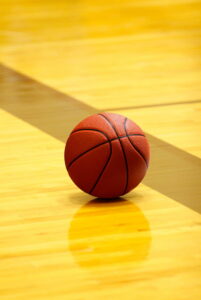 Court requirements vary based on available space, intended users, and budget. We work across the full range of project types.
Residential Half-Courts. The most common residential configuration. A half-court provides enough space for skill development, shooting practice, and small-group games while fitting on typical Annapolis-area lots. Standard half-court dimensions run 50′ x 42′, though we adapt sizes to work within available space when necessary.
Residential Full Courts. Properties with sufficient acreage can accommodate regulation full courts (94′ x 50′). These installations allow real game play and serious practice. Full courts represent significant investments and require careful site planning, but nothing else replicates actual game conditions.
Modified and Compact Courts. Not every property fits standard dimensions. We design modified courts that maximize playability within constrained spaces—narrower widths, shortened lengths, adjusted key dimensions. A well-designed compact court beats a cramped attempt at standard dimensions.
School and Athletic Facilities. Educational institutions need courts that meet competition standards, handle intensive daily use, and satisfy safety requirements. Proper dimensions for the appropriate level of play. Surfaces rated for high-traffic applications. Goal systems built for institutional durability. We coordinate with athletic directors and facility managers on specifications.
Parks and Recreation Courts. Public courts serve entire communities. Construction must withstand heavy use from diverse players of all skill levels. ADA accessibility requirements apply to public facilities. Multi-court layouts maximize programming flexibility for parks departments.
Church and Community Center Courts. Recreation facilities for congregations and community organizations. These projects often balance athletic function with budget realities, requiring smart decisions about where to invest and where to economize without compromising safety or playability.
Apartment and HOA Community Courts. Amenity courts that attract and retain residents. Durable construction handles use from rotating populations. Lighting extends usable hours. Fencing and placement address noise concerns when courts sit near residential buildings.
Multi-Sport Installations. Courts designed for basketball plus additional activities. Basketball and pickleball combinations have become particularly popular. Basketball and volleyball. Basketball and futsal. Proper planning allows one surface to serve multiple sports effectively.
Important Aspects of Annapolis Basketball Court Construction
Building courts that play well and last requires attention to details that aren’t immediately visible.
Site Selection and Grading. Court placement affects playability and integration with surrounding property. Orientation relative to sun angle matters for outdoor play. Grade changes require evaluation—building on slopes adds complexity and cost. Drainage patterns must direct water away from the court without creating problems elsewhere.
Base Preparation. What’s beneath the surface determines long-term performance. Proper excavation removes unsuitable material. Compacted aggregate base provides stable support and facilitates drainage. Inadequate base preparation leads to settling, cracking, and premature surface failure. We don’t shortcut this phase.
Concrete Specifications. Basketball courts demand reinforced concrete slabs of appropriate thickness—typically 4″ minimum for residential, thicker for institutional applications. Concrete mix design, reinforcement placement, control joint layout, and cure time all affect durability. Courts built to residential patio standards often fail within a few years of athletic use.
Surface Systems. Acrylic sport surfaces provide the playing characteristics basketball requires—appropriate ball bounce, consistent traction for running and cutting, durability under intensive use. Surface texture affects player safety and ball response. Color choices impact heat absorption and visual appearance. We specify systems matched to intended use intensity.
Goal Systems. Hoop selection significantly affects the playing experience. In-ground systems with tempered glass backboards provide the best response and durability. Adjustable height goals suit facilities serving players of different ages. Wall-mounted systems work where space constraints prevent freestanding installations. We help match goal specifications to user needs and budgets.
Court Dimensions and Markings. Regulation dimensions exist for good reason—the game was designed around them. When space allows, we build to standard specifications. When constraints require modifications, we maintain proportional relationships that preserve game flow. Lines are painted to governing body standards for the appropriate level of play.
Lighting for Evening Play. Outdoor courts without lighting have limited usable hours, especially during fall and winter when daylight ends early. Sport court lighting requires proper fixture selection, pole placement, and aiming to achieve adequate illumination without glare or excessive spillover. LED systems reduce operating costs for facilities with regular evening use.
Fencing and Containment. Perimeter fencing keeps balls on the court and defines the playing area. Height, mesh size, and gate placement affect both function and appearance. Institutional facilities often require specific fence specifications for safety and security.
Permit Requirements. Anne Arundel County requires permits for court construction. Applications involve site plans, setback documentation, and impervious surface calculations. Larger projects may trigger stormwater management requirements. We manage permitting from application through final inspection.
What Are the Steps of the Basketball Court Construction Process?
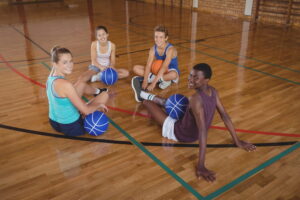 Court construction proceeds through defined phases. The sequence matters—skipping steps or rushing phases creates problems that surface later.
Step 1: Site Evaluation and Consultation. We visit the property to assess available space, grade conditions, access for construction equipment, and any constraints affecting court placement. For institutional clients, we discuss programming needs, user groups, and facility integration. This conversation establishes project parameters and identifies potential challenges early.
Step 2: Design Development. Court plans take shape based on site conditions and client requirements. Dimensions and layout. Goal system selection. Surface specifications. Fencing configuration. Lighting if included. Multi-sport striping where applicable. Designs balance ideal specifications with practical constraints.
Step 3: Proposal and Approvals. Detailed proposals cover scope, specifications, timeline, and cost. For institutional and community projects, plans may require board approvals, committee review, or public input processes. We provide documentation needed for these approvals.
Step 4: Permitting. Applications go to Anne Arundel County with required site plans and documentation. We manage submissions, respond to reviewer comments, and obtain approvals before construction begins. Permit timelines vary but typically run three to six weeks.
Step 5: Site Preparation. Clearing and excavation establish the court footprint. Unsuitable material is removed. Rough grading establishes drainage patterns. Underground utilities are identified and protected. The site gets prepared to receive base construction.
Step 6: Base Installation. Aggregate base material goes down in layers, each compacted to specification. Base thickness and compaction meet requirements for the intended use intensity. This foundation work prevents the settling and structural cracking that undermine courts built on shortcuts.
Step 7: Concrete Placement. Forms are set to precise dimensions. Reinforcement is positioned correctly. Concrete is placed, finished to appropriate texture, and protected during cure. Control joints are cut to manage cracking. Adequate cure time passes before any surface work begins.
Step 8: Surface Application. Acrylic court surfacing is applied in multiple coats. Base coats address any minor surface irregularities. Color coats establish the playing surface with appropriate texture. The number of coats depends on surface specifications and use requirements.
Step 9: Lines and Goals. Court lines are measured, laid out, and painted to regulation specifications. Goal systems are installed—in-ground posts set in concrete require coordination earlier in the process. Nets are hung and systems adjusted.
Step 10: Final Inspection and Handoff. We verify surface quality, line accuracy, goal alignment, and overall construction. Punch list items are addressed. For institutional clients, we coordinate final inspections with facility managers. Courts are ready for play.
Contact Back Creek Builders
If you’re considering a basketball court for your Annapolis property—residential, institutional, or commercial—we’d welcome the opportunity to discuss your project. We build courts that play correctly and hold up over years of use, whether serving a single family or an entire community.
Contact us to schedule a site evaluation. Back Creek Builders constructs basketball courts throughout Annapolis and Anne Arundel County with the same standards we apply to tennis courts, pickleball courts, and residential construction projects.