
Sport Court Lighting Installation Annapolis, MD
Court lighting extends usable playing hours beyond what daylight permits. For residential courts, evening availability after work. For clubs and community facilities, programming flexibility is otherwise constrained by sunset times. A court without lighting sits idle most weekday evenings and throughout winter afternoons.
The technical requirements matter as much as the decision to install. Light levels must reach specific thresholds measured in foot-candles. Tennis demands different levels than pickleball. Recreational play differs from tournament conditions. Distribution across the playing surface requires uniformity—no dark zones near baselines, no hot spots under fixtures. Glare control keeps balls trackable against dark skies. Spillover management prevents light trespass onto neighboring properties.
Annapolis adds complexity. Salt air off the Chesapeake accelerates corrosion on fixtures and hardware. Established neighborhoods carry expectations about visual impact. Anne Arundel County regulates electrical work and, in some cases, outdoor lighting specifically.
At Back Creek Builders, we design and install lighting for tennis courts, pickleball courts, basketball courts, and multi-sport facilities throughout the Annapolis area. Our Annapolis sport court lighting installation addresses performance requirements and the practical realities affecting whether clients remain satisfied years later. Reach out to discuss your project.
Why Choose Back Creek Builders for Sport Court Lighting Installation in Annapolis?
Court Builders First
We build courts. Tennis, pickleball, basketball, multi-sport. That shapes how we think about lighting.
Parking lot lighting? Patio lighting? Those are different problems. Sport court lighting serves players tracking fast-moving balls, reacting to opponents, and using the full dimensions of a playing surface. Illumination must be adequate. Uniform. Glare-controlled. These aren’t generic lighting goals—they’re sport-specific requirements we understand because we play and build for players.
Eric Young and Jason Gelblum founded Back Creek Builders with backgrounds in residential and commercial construction. Eric serves as President, bringing real estate development and construction planning experience. Jason operates as Chief Operating Officer with roughly nine years across leadership and project management. Baltimore Magazine has featured their work.
Both play competitive pickleball. They’ve squinted through glare on poorly lit courts. Chased balls into shadows that shouldn’t exist. They know what proper lighting requires because they’ve experienced the alternative.
Range of Project Settings
A backyard pickleball court involves different considerations than an eight-court municipal complex. We’ve done both. And variations between.
Residential installations balance performance with neighbor impact. Community facilities navigate board approvals and resident opinions. Commercial clubs expect premium quality matching their membership standards. Public parks need durability and code compliance. Our portfolio spans this range throughout Anne Arundel County.
That breadth builds knowledge. Which fixtures control spill effectively. What pole heights work for different court types. How to sequence installation with court construction. Where problems typically emerge.
LED Systems Standard
Metal halide dominated court lighting for decades. No longer.
LED advantages are substantial. Energy consumption drops by half or more. Fixtures turn on instantly—no fifteen-minute warm-up. Lifespan extends dramatically, meaning fewer replacements and less maintenance. Light quality improves with better color rendering. Optical control becomes more precise.
We specify LED for most installations. The upfront cost runs higher. Operating costs run lower. For courts seeing regular evening use, payback typically arrives within a few years.
Controlling Light Where It Belongs
Light spilling onto neighboring properties creates problems. Complaints. Conflicts. Sometimes code violations.
We design for control. Shielded fixtures directing light downward. Pole placement optimized for court coverage, not maximum throw distance. Careful aiming during installation. The goal: adequate illumination on the playing surface, minimal impact beyond property lines.
In established Annapolis neighborhoods, this matters considerably. Courts should extend playing hours without becoming neighborhood nuisances.
What Our Clients Say
⭐⭐⭐⭐⭐
“We hired Back Creek Builders to put in a pickleball court and couldn’t be happier. The entire process was smooth—great communication, quality work, and they clearly knew what they were doing. Court plays great and looks even better.” — Sam Gurman
Read more reviews on our Google Business Profile.
Types of Sport Court Lighting Projects We Handle in Annapolis
 Requirements vary by court type, use intensity, and setting.
Tennis Court Lighting. Large court dimensions. Fast ball speeds. Four to eight poles depending on configuration. Mounting heights of 30 feet or more. LED has become standard, offering performance and efficiency that metal halide cannot match.
Pickleball Court Lighting. Smaller dimensions than tennis allow lower mounting heights. Multi-court facilities demand careful layout—uniform coverage across all courts, no shadows at boundaries where courts meet. We’ve lit single backyard courts and community complexes with a dozen playing surfaces.
Basketball Court Lighting. Vertical play matters here. Shots arc high. Lighting must illuminate not just the surface but the full height players use. Fixture positioning avoids interference with shooting sightlines. Recreational use tolerates lower levels than competitive league play requires.
Multi-Sport Court Lighting. Tennis and pickleball on one surface. Basketball and pickleball sharing space. Each sport carries recommended illumination levels. We design systems serving all intended uses adequately.
Residential Installations. Private courts on residential properties. Performance requirements exist. So do neighbor considerations. Fixture selection emphasizes control. Pole heights stay reasonable. Timers or controls limit operating hours. Evening play without evening conflicts.
Community and HOA Facilities. Multiple stakeholders. Board approval processes. Resident input. Budget constraints. Adjacent homeowner concerns. We help associations work through these dynamics while delivering functional results.
Parks and Public Facilities. Municipal courts serving the public require lighting meeting accessibility standards. Higher illumination for competitive programming. Durable fixtures handling public use. Efficient maintenance for parks staff. Different requirements than private installations.
Commercial and Club Installations. Country clubs expect premium everything. Higher light levels. Sophisticated controls. Aesthetic integration with grounds. Reliable systems that don’t interrupt programming for repairs.
Retrofits and Upgrades. Existing courts with aging or failed systems. Metal halide conversions to LED. Corroded pole replacement. Control upgrades. Adding lighting to courts built without it. We assess what exists and recommend practical paths forward.
Important Aspects of Annapolis Sport Court Lighting Installation
Technical, regulatory, and practical considerations extend well beyond choosing fixtures.
Light Level Requirements. Recreational tennis typically needs 30-50 foot-candles. Tournament play pushes to 75 or higher. Basketball works with 20-30 foot-candles for casual use. Competitive settings demand more. We match specifications to intended use. Under-lit courts frustrate players. Over-engineered systems waste money.
Uniformity Matters More Than Averages. A court averaging 40 foot-candles sounds adequate. If that average includes 60 in some zones and 20 in others, players notice. Dark spots affect play even when overall readings seem fine. Good design achieves uniformity ratios of 2:1 or better—meaning the brightest areas measure no more than twice the dimmest.
Glare Control. When players look up against the dark sky, fixtures in their sightline create glare that makes tracking impossible. Shielding, positioning, and fixture selection all contribute to control. LED optics have improved dramatically here, offering precise beam patterns that older technologies couldn’t achieve.
Spillover and Light Trespass. Light crossing property boundaries causes neighbor problems. Shielded fixtures help. Careful aiming matters. Pole placement affects how far light travels. Dark sky principles guide responsible design. Courts should illuminate playing surfaces, not entire neighborhoods.
Electrical Infrastructure. Court lighting draws significant power. LED less than metal halide, but still substantial. Panels may need evaluation. Dedicated circuits are required. Underground conduit runs from source to poles. Everything must meet electrical code.
Pole Specifications. Height, material, foundation requirements—all vary by application. Residential courts might use 20-foot poles. Large facilities go to 40 feet or higher. Steel, aluminum, fiberglass each offer tradeoffs. Foundations must handle wind loads. In coastal Annapolis, salt air affects material selection.
Controls. Simple timers work for basic residential installations. Larger facilities benefit from programmable systems—different levels for different activities, occupancy sensing, remote operation. Smart controls integrate with facility management where that matters.
Permits. Electrical permits from Anne Arundel County are typically required. Some areas regulate outdoor lighting specifically—allowable levels at property lines, maximum pole heights, operating hours. We identify requirements before installation begins.
Coastal Durability. Annapolis sits on the Chesapeake. Salt air corrodes. Marine-grade finishes, stainless hardware, appropriate material specifications extend system life. These add cost. They also prevent premature failure.
What Are the Steps of the Sport Court Lighting Installation Process?
 Installation follows a defined sequence whether adding lighting to existing courts or incorporating it into new construction.
Step 1: Assessment and Consultation. We evaluate the site and discuss how you’ll use the court—recreational play, competitive matches, league programming. For existing properties, we review current electrical infrastructure. New court projects integrate lighting into broader construction planning. Budget and timeline parameters get established during this conversation.
Step 2: Photometric Design. Specialized software models predict illumination across the court surface. We test different configurations—varying fixture counts, pole locations, and mounting heights—until achieving target light levels with proper uniformity and controlled spillover. These models guide every subsequent decision.
Step 3: Electrical Planning. Power requirements are calculated based on fixture specifications. We evaluate existing service capacity and identify panel upgrades if current systems prove insufficient. Conduit routing is planned from power source to each pole location. The infrastructure must support what the lighting system demands.
Step 4: Proposal Development. Detailed proposals document the complete scope—fixture specifications, pole specifications, electrical work, and itemized costs. Photometric studies showing predicted performance accompany each proposal. Clients understand exactly what’s included before making commitments.
Step 5: Permitting. Applications go to Anne Arundel County for electrical permits. Some locations require additional approvals where outdoor lighting faces specific regulation. We prepare documentation and secure all necessary permits before any installation work begins.
Step 6: Underground Work. Conduit runs from power source to pole locations, with trenching routed carefully through existing landscape. Affected areas are restored upon completion. On new court projects, this phase coordinates with broader court construction to minimize disruption and cost.
Step 7: Pole Installation. Concrete foundations are sized for specific pole specifications and local wind load requirements. Anchor bolts are positioned precisely for base attachment. Adequate cure time must pass before poles are erected—this foundation work determines long-term stability.
Step 8: Fixture Mounting and Wiring. Fixtures are installed at specified heights and orientations according to the photometric design. All electrical connections are completed at each pole location. Wiring meets code requirements throughout the system.
Step 9: Aiming and Verification. Each fixture is aimed according to photometric specifications. On-site light level readings verify that actual performance matches design predictions. We make adjustments to address any deviation, and evaluate glare and spillover under actual operating conditions.
Step 10: Inspection and Handoff. Electrical inspection confirms code compliance. We demonstrate control system operation and review maintenance requirements with you. Documentation transfers to the client, and courts are ready for evening play.
Contact Back Creek Builders
If your Annapolis sport court needs lighting—new installation, retrofit, or upgrade—we’d welcome the conversation. Properly designed systems extend playing hours while respecting neighbors and operating efficiently for years.
Contact us to schedule a consultation. Back Creek Builders brings the same standards to lighting that we apply to court construction, resurfacing, and every project throughout Anne Arundel County.
Meet Our Team

Jason Gelblum
Jason Gelblum co-founded Back Creek Builders and serves as Chief Operating Officer, managing operations, client relationships, and project coordination across the company's portfolio. He brings roughly nine years of professional experience spanning leadership roles, real estate, operations, and construction management.

Eric Young
Eric Young co-founded Back Creek Builders and serves as President, overseeing construction planning and project execution across the company's residential and sport court work. His background spans real estate development and hands-on construction management, giving him a perspective on projects from initial land evaluation through final walkthrough.
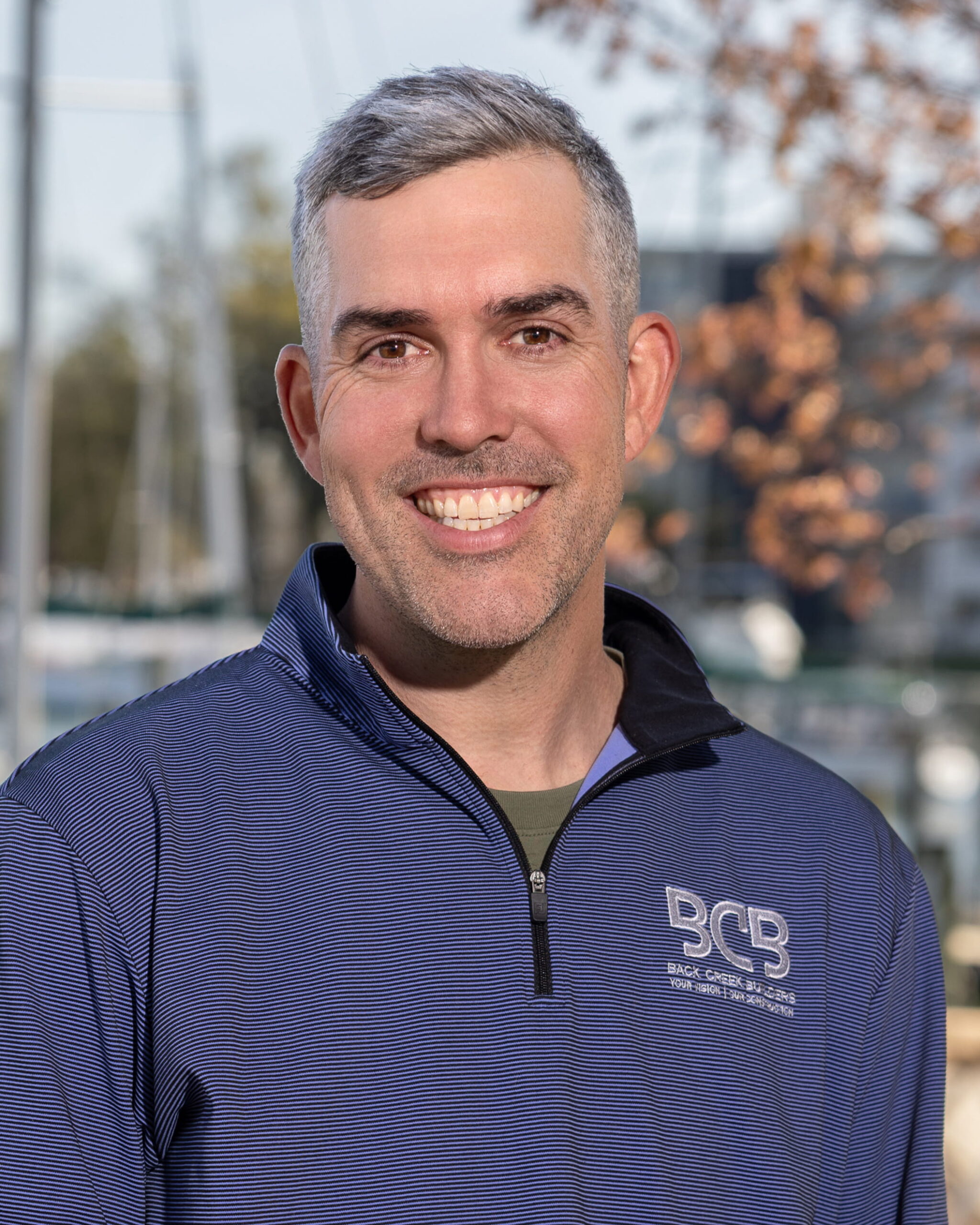
David Stockum
David Stockum is a partner at Back Creek Builders who brings deep experience in residential and commercial restoration, operations, and construction management. He’s known for turning complex projects into well-coordinated builds, standardizing processes, and keeping communication clear so work is delivered on time, on budget, and to a high standard.